
When I took some pictures of a moving flock of birds from a distance (20-Jul 2016), I believed it to be a flock of thrushes of the family turdidae. I got a closer look at the pictures at home and realized that I couldn’t recognize the birds. Several of the birds seemed to have lots of white spots on their chests, and this didn’t match the types of thrushes which are more common around here. I couldn’t make out the spots when I took the pictures, only when I could examine the pictures closer at home. After some research, I figure this might be a flock of common starlings. Although I wouldn’t mind getting even closer to the birds next time, this was close enough to learn some of the differences between thrushes and starlings. And this isn’t the first time I see a flock like this. I have to keep my camera close from now on.


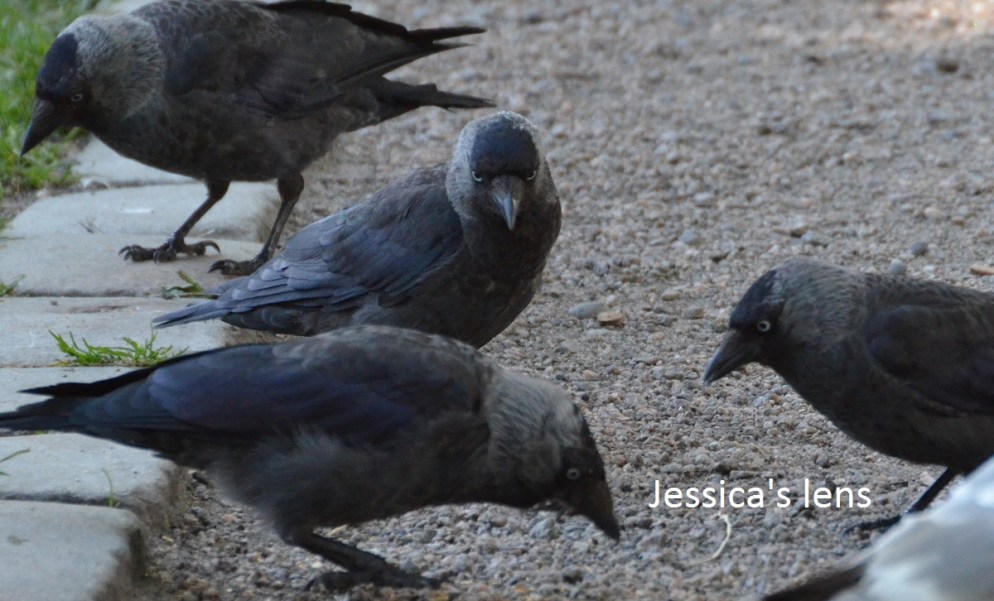


 Jessica's lens